
Diagnosis with a written plan
We identify the failed part or underlying condition—sediment, venting, pressure issues, a failing dip tube, or a worn anode—and explain repair versus replacement options in plain language.
Serving Chesapeake, Virginia & surrounding areas
Mon–Fri 8am–6pm Sat 9am–2pm
Keep your hot water dependable with prompt troubleshooting, clear options, and careful workmanship for tank and tankless systems in Suffolk homes.
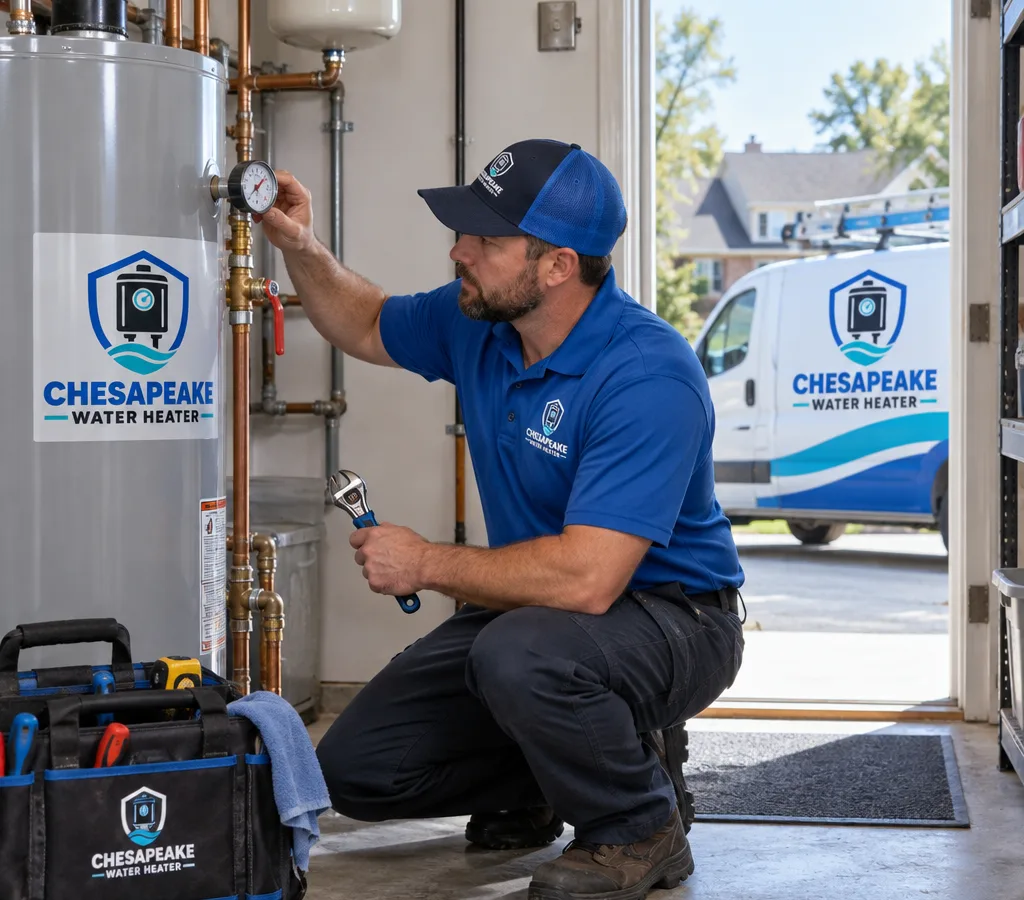
When you schedule water heater service Suffolk homeowners can count on, you are paying for two things: safe work around gas or electricity, and a clear plan to get hot water back without guessing. Chesapeake Water Heater handles inspection, troubleshooting, repair, and routine care for common residential water heaters, including standard tank units and many tankless setups.
Service usually starts with the basics that tell the real story: verifying power or gas supply, checking temperature settings, inspecting the T&P (temperature and pressure) relief valve and discharge line, looking for signs of leakage or corrosion around the tank, and testing for failed components such as thermostats, heating elements, gas control valves, igniters, and flame sensors. On electric models we also check wiring connections and breakers; on gas models we confirm safe venting and proper combustion-related operation.
Suffolk homes often have water heaters tucked into garages, utility closets, or tight mechanical spaces. Access matters. A careful tech protects flooring, controls water shutoffs, and confirms proper drainage before any work starts so your repair does not turn into a cleanup job.
We identify the failed part or underlying condition—sediment, venting, pressure issues, a failing dip tube, or a worn anode—and explain repair versus replacement options in plain language.
No hot water, lukewarm water, tripping breakers, pilot and ignition issues, rumbling or popping sounds, and small leaks around fittings are all problems we troubleshoot and repair when the unit is serviceable.
Tank flushing when appropriate, anode rod checks, temperature-setting verification, and valve inspections help reduce sediment-related noise and extend usable life.
We confirm shutoff operation, look for gas or water leaks, check proper relief-valve function, and review venting and clearances on gas units.
Tankless heaters often need periodic descaling and inlet-screen cleaning. We check error codes, flow, and venting so performance stays consistent.
A water heater can give you warnings for days or weeks before it quits. If you notice any of the issues below, it is smart to schedule water heater repair Suffolk residents trust before a small problem becomes a leak or a no-hot-water morning.
Common red flags include:
If the heater is in a garage or utility closet, also watch for slow leaks that can go unnoticed. Catching them early protects drywall, insulation, and anything stored nearby.
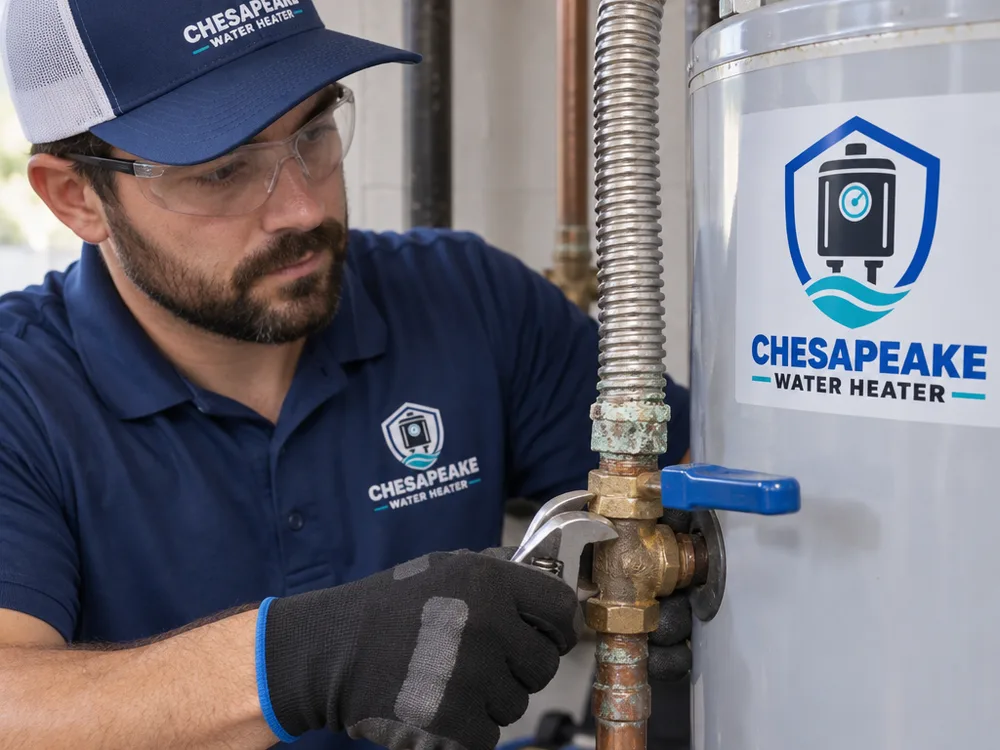
We start with what you are experiencing—no hot water, leaks, noise, or temperature swings—and confirm the model type, fuel source, and age as best as possible from the rating plate.
We check shutoffs, pressure-relief components, visible leaks, venting basics on gas units, and signs of overheating or electrical damage on electric units.
Depending on the unit, that can include heating elements and thermostats, a gas control valve, thermocouple, igniter, flame sensor, limit switches, and tankless flow sensing and error codes.
If a repair is appropriate, we outline the part and labor scope. If the tank is compromised or the system is near the end of its life, we explain replacement triggers so you can decide with full context.
After repair or maintenance, we bring the unit back online, verify stable temperature and normal cycling, and leave the area clean.
Water heater service in Suffolk typically runs about $150 to $450 for inspection, troubleshooting, and minor repairs, while larger repairs can land around $450 to $1,200+ depending on parts and heater type. Simple electric fixes such as a thermostat or element are usually on the lower end; gas-control components and many tankless repairs often cost more.
Final price depends on the exact failure, accessibility—tight closets versus open garage installations—whether any code-related corrections are needed, and if maintenance such as flushing or descaling is included. The exact scope and cost are confirmed after the on-site diagnosis.
Routine care is not complicated, but it needs to be done safely. For tank-style heaters, periodic flushing can help when sediment is building up and causing noise or reduced capacity. We also look at the anode rod condition when appropriate, since a depleted anode can accelerate tank corrosion. On gas units, we pay attention to venting and combustion-related operation because those conditions affect safety as much as comfort.
For tankless systems, maintenance usually focuses on flow and heat transfer: descaling when mineral buildup is suspected, cleaning inlet screens, and checking for error codes and stable output temperature. If your home has a recirculation line or comfort pump, that can change what we check during service.
If you are also trying to pin down an active leak or total loss of hot water, start with hot water heater repair so you know what information helps us triage the problem quickly.
“We had lukewarm water and a loud rumble from the tank. The tech explained what was happening, replaced the failed part, and talked us through basic maintenance so it would not come back right away.”
“Our tankless unit kept throwing an error code. They checked flow, cleaned what needed cleaning, and got the temperature steady again. Clear communication the whole time.”
Tell us what your water heater is doing and where it is installed, and we will schedule a service visit to diagnose the issue, explain your options, and restore safe, reliable hot water.